Source meat soaker pad for meat, poultry, and seafood packaging
Find 30 verified suppliers offering meat soaker pad solutions with varying absorbency and sizes. Compare specifications, materials, and pricing to select the right option for food packaging needs.
Key considerations
Products List

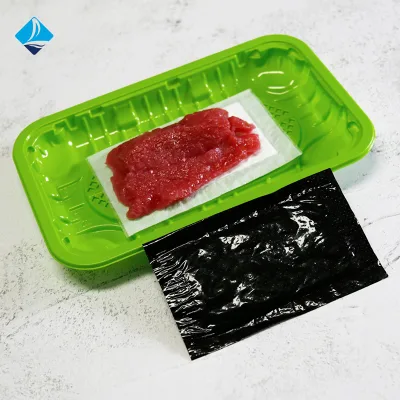
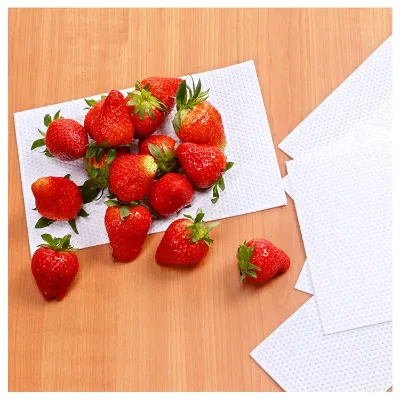
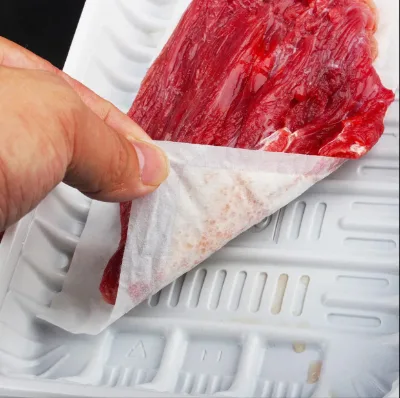


Comprehensive Sourcing Guide
Strategic Sourcing Guide for Meat Soaker Pad Procurement
Understanding Product Variants and Technical Specifications
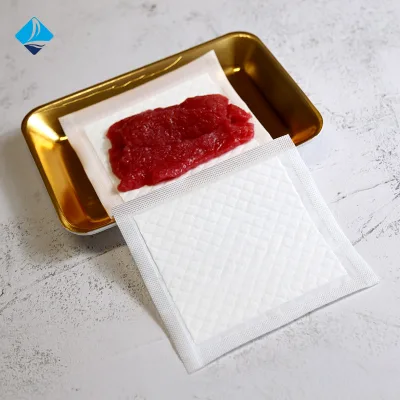
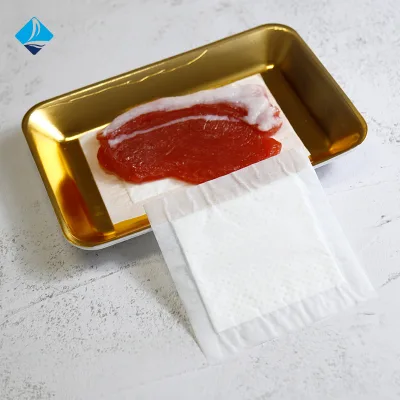
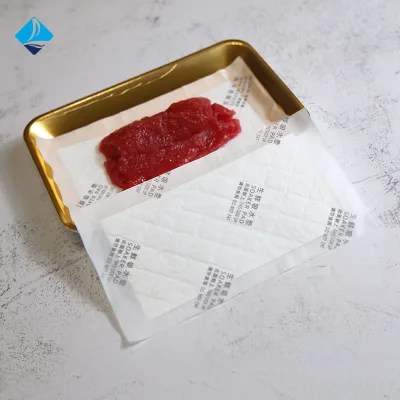
The market for meat soaker pads, often categorized under absorbent pads or food packaging liners, presents a diverse array of technical configurations rather than a single standardized item. When initiating a procurement search for "meat soaker pad," buyers must first distinguish between the specific material compositions and dimensional requirements that define the product's utility. The core function of these pads is to manage liquid retention within food packaging, preventing cross-contamination and maintaining product appearance. Based on observed market data, the material composition varies significantly between suppliers, influencing both cost and performance. One common configuration utilizes a multi-layer structure comprising PE film, pulp, tissue paper, SAP (Super Absorbent Polymer), and non-woven materials. In contrast, alternative variants may rely on a combination of PET film, PE film, SAP, and non-woven fabrics. This distinction is critical because the inclusion of PET film often suggests a different barrier property or rigidity compared to pure PE film constructions.
Dimensional specifications are equally variable and must be aligned with the specific packaging machinery and product dimensions of the buyer. Observed standard sizes include 130 x 80 mm, which is a common footprint for standard meat cuts, while other suppliers offer a broader range including 70 x 100 mm, 70 x 140 mm, 210 x 100 mm, and even elongated formats like 28 x 420 mm. Some manufacturers provide a fixed size of 180 x 100 mm, while others emphasize customization capabilities to fit unique tray dimensions. The absorbency capacity is another primary differentiator, with observed ranges spanning from 40 ml to as high as 2000 ml per piece. A standard specification often cites an absorbency of 60 ml per piece, whereas high-capacity variants may be engineered to handle significantly larger fluid volumes. Buyers must verify the specific absorbency rating required for their product's expected liquid yield, as this directly impacts the frequency of pad replacement and the overall cost of goods sold.
Compliance, Certification, and Material Safety Verification
In the food packaging sector, compliance with safety standards is not merely a regulatory formality but a fundamental requirement for market access. The primary attribute observed across high-confidence product listings is the designation of "Food grade" and "eco-friendly" status. However, buyers must treat these descriptors as observations of the supplier's claims rather than guaranteed certifications without third-party validation. The industrial use is explicitly listed as "Food," and specific applications include meat, poultry, seafood, fruit, and vegetables. To ensure safety, procurement teams must request documentation proving that the materials—specifically the PE film, PET film, pulp, and SAP components—comply with relevant food contact regulations in the target market, such as FDA regulations in the United States or EU Framework Regulation (EC) No 1935/2004.
The presence of Super Absorbent Polymer (SAP) necessitates careful scrutiny regarding its food-grade status. While the material is essential for liquid retention, it must be verified that the SAP does not leach harmful substances into the food product. Additionally, the non-woven layers used in the construction must be free from contaminants that could compromise food safety. Buyers should verify that the manufacturing process adheres to Good Manufacturing Practices (GMP) and that the facility holds necessary hygiene certifications. Although specific certification names are not provided in the general product data, the expectation is that suppliers operating in the food sector will possess ISO 22000 or similar food safety management system certifications. The "eco-friendly" claim should be supported by data regarding the recyclability of the pulp component or the biodegradability of the materials, as sustainability is increasingly becoming a procurement criterion.
Cost Drivers and Economic Factors in Procurement
The economic landscape for meat soaker pads is influenced by several dynamic factors, with the Minimum Order Quantity (MOQ) being a primary driver of unit cost. Market observations reveal a wide spectrum of MOQ requirements, ranging from as low as 500 pieces to as high as 500,000 pieces. This variance suggests that smaller suppliers or those offering highly customized solutions may have lower entry barriers, while large-scale manufacturers often require substantial volume commitments to justify production runs. The observed MOQ of 50,000 pieces or 100,000 pieces for specific models indicates that economies of scale play a significant role in pricing. Buyers must align their order volumes with their storage capacity and cash flow constraints, as ordering below the supplier's MOQ may result in prohibitive setup fees or higher per-unit costs.
Material costs constitute another significant variable. The inclusion of SAP, which is a specialized chemical component, can drive up the base cost of the pad compared to simple pulp or paper alternatives. Furthermore, the choice between PE film and PET film affects the price, with PET generally being more expensive due to its superior barrier properties and clarity. Customization of size, color, and logo printing also introduces cost premiums. While standard white pads are the norm, options for black, red, green, blue, and yellow colors are available, often requiring separate production runs or specific dye formulations. The packaging configuration, such as 3000 pieces per carton or 500 pieces per bag, impacts logistics costs. Buyers should calculate the total landed cost, including shipping, which can be influenced by the single gross weight of the product, ranging from 0.001 kg to 0.100 kg per unit depending on the density and size of the pad.
Typical Applications and Industrial Use Cases
The versatility of meat soaker pads extends across various segments of the food industry, with the primary application being the absorption of excess water and blood in meat packaging. The observed applications explicitly include meat, poultry, seafood, fruit, and vegetables. In the meat and poultry sector, these pads are essential for maintaining the visual appeal of the product by preventing the pooling of juices, which can lead to a slimy texture and reduced consumer confidence. For seafood, the pads help manage the high moisture content inherent in fresh fish and shellfish, ensuring that the packaging remains dry and the product stays fresh for longer periods.
Beyond fresh meat, the utility of these pads extends to fruit and vegetable packaging, where they absorb condensation and excess moisture that can accelerate spoilage. The "Industrial Use" classification as "Food" confirms their suitability for direct contact with consumable goods. The specific design features, such as the "Plain" pattern and "Food grade" material, make them ideal for retail environments where product presentation is paramount. In the context of home textiles or hygiene, some variants may be repurposed, though their primary design intent remains food packaging. The ability to customize the absorbency to match the specific liquid yield of different products allows for optimized performance; for instance, a pad with 2000 ml absorbency might be used for high-moisture products like fresh fish, while a 40 ml pad might suffice for leaner cuts of meat.
Supplier Evaluation and Operational Capabilities
When evaluating potential suppliers for meat soaker pads, buyers must assess a range of operational capabilities beyond the basic product specifications. The supply ability is a critical metric, with some manufacturers claiming a capacity of 1,000,000 pieces per day. This high-volume capability suggests that the supplier can handle large orders and maintain consistent supply during peak demand periods. However, buyers should verify this claim through site audits or by requesting references from other large-scale clients. The lead time, observed as 15 days for delivery, is another key factor in supply chain planning. While this is a standard timeframe, it can vary based on order volume, customization requirements, and the supplier's current production load.
The location of the manufacturing facility is also relevant for logistics and trade compliance. Observed places of origin include Anhui, China, and Guangdong, China. These regions are known for their manufacturing clusters, but buyers should consider the proximity to major ports, such as Shanghai, which is listed as a port of dispatch. This information is vital for calculating shipping times and costs. Furthermore, the supplier's willingness to accept OEM (Original Equipment Manufacturer) and ODM (Original Design Manufacturer) orders indicates flexibility in branding and product design. The ability to print logos in specific sizes and colors allows for brand differentiation, which is crucial for retailers looking to establish a unique identity. Buyers should also inquire about the supplier's quality control processes, including how they handle defects and ensure consistency across production batches.
Quality Control and Long-Term Procurement Considerations
Ensuring consistent quality in meat soaker pads requires a robust quality control (QC) framework that addresses both material integrity and functional performance. Buyers should implement incoming inspection protocols that verify the dimensions, absorbency, and material composition of the pads. The single package size, observed as 40x40x20 cm for some models, and the gross weight of 0.100 kg provide benchmarks for checking packaging consistency. Deviations in these metrics can indicate production issues or material substitution. Additionally, the "Selling Units" being listed as "Single item" suggests that the product is often sold in bulk cartons, requiring careful handling to prevent damage during transit.
Long-term procurement considerations involve building a resilient supply chain that can adapt to market fluctuations. The "Make-To-Order" supply type indicates that some suppliers operate on a flexible production model, which can be advantageous for managing inventory levels. However, this may also introduce variability in lead times. Buyers should establish clear communication channels with suppliers to monitor production schedules and anticipate potential delays. The "Customized" nature of many specifications, including size, color, and absorbency, means that long-term contracts should include clauses for design changes and volume adjustments. Finally, sustainability should be a core consideration in long-term strategy. As environmental regulations tighten, buyers should prioritize suppliers who demonstrate a commitment to eco-friendly practices and offer materials that are easier to recycle or dispose of responsibly. By focusing on these strategic elements, buyers can secure a reliable supply of high-quality meat soaker pads that meet both operational and regulatory requirements.
FAQs
What materials are used to make meat soaker pads?
Meat soaker pads typically use a multi-layer structure of PE film, pulp, tissue paper, SAP, and non-woven fabric. Some variants may substitute PE film with PET film for different barrier properties, while others combine PET and PE films with SAP and non-woven materials to manage liquid retention effectively.
Which absorbency levels are available for these pads?
Absorbency ranges from 40 ml per piece up to 2000 ml per piece depending on the specific model. Standard specifications often cite 60 ml per piece, while high-capacity variants are engineered to handle significantly larger fluid volumes for products like fresh fish or high-moisture meats.
Can I customize the size and color of the pads?
Yes, customization is widely accepted for both size and color to fit unique packaging requirements. Standard sizes include 130 x 80 mm, 180 x 100 mm, and 70 x 100 mm, while colors can be white, black, red, green, blue, or yellow based on specific buyer needs.
What is the typical minimum order quantity for suppliers?
Minimum order quantities vary significantly, ranging from 500 pieces to 500,000 pieces depending on the manufacturer. Some suppliers require 50,000 or 100,000 pieces for standard models, while others offer lower entry barriers for customized or smaller production runs.
How long does it take to receive an order?
The standard delivery time is typically 15 days from the order confirmation date. This lead time may vary based on order volume, customization requirements, and the supplier's current production load, so buyers should verify specific timelines before placing large orders.
Are these pads suitable for food contact applications?
Yes, these pads are explicitly designed for food industrial use and are described as food grade and eco-friendly. They are intended for direct contact with meat, poultry, seafood, fruits, and vegetables, though buyers should request documentation to verify compliance with local food safety regulations.